
AML agent conversation
A Persona-bound agent conversation that uses the capabilities behind an established AML product.
Read this exampleStart with the knowledge work people need to accomplish. Define the agent's role, the knowledge and tools it can use, and the permissions around its actions. Then build the screens, workflow, code, and integrations that help people work with it. IKE keeps the agent and application connected.
Vibe coding can get a first version working quickly. Putting an agentic application in front of customers means deciding whose data it can use, which actions it can take, how it handles credentials, and what happens when a tool or run fails.
That work calls for experience across the application and the services behind it: user isolation, runtime lifecycle, integrations, recovery, and operations. IKE keeps the agent's role, knowledge, capabilities, permissions, and session connected. Through a Design Partnership, Omni Arcs Product Studio helps you scope those requirements and build the application around them. The work also helps refine the IKE ADK for public availability.
Define the knowledge-work outcome.
Limit tools and integrations to the work.
Keep context and permissions attached.
Show evidence and results people can review.
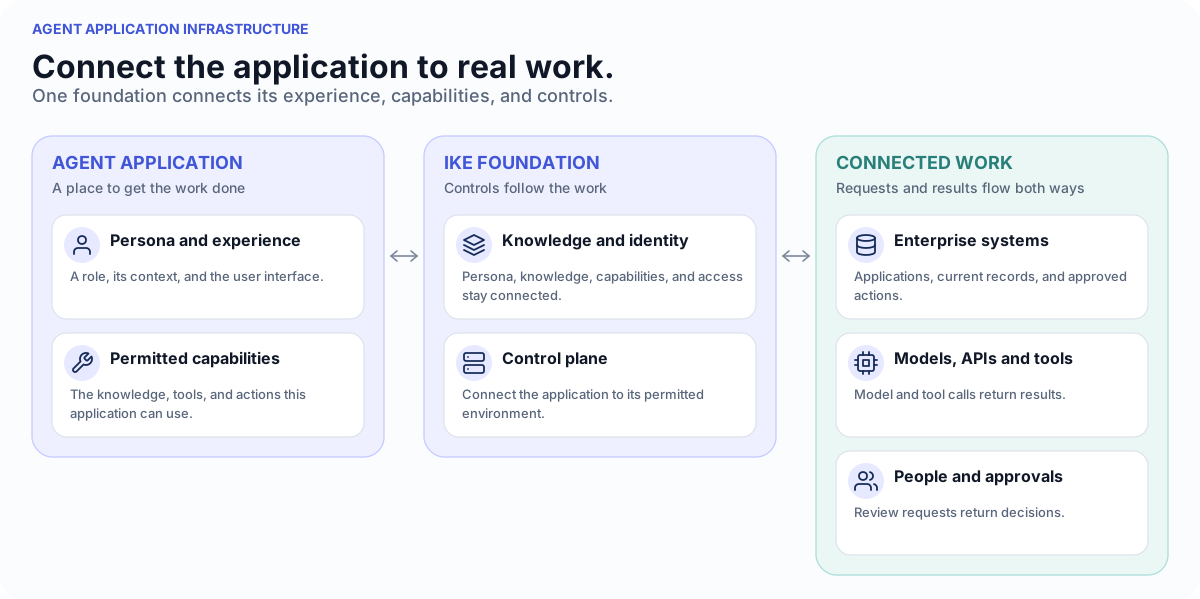
The IKE ADK connects the product and runtime concepts an agentic application needs, so each application does not have to rebuild the platform.
Agent Applications, Agent Groups, Personas, and Persona Bindings define the agent and its operating context.
Collections, Knowledge Artifacts, and Ingestion Pipelines organize and update the sources an application uses.
Skills, Tools, Blocks, and Capabilities describe reusable work the application can compose.
Application Sessions, Conversations, Runs, Jobs, and Reviews carry work across chat and purpose-built experiences.
Principals, Roles, Policies, Entitlements, Sharing, and Authority govern who can use each capability.
Models, Model Profiles, embeddings, routing, guardrails, and provider configuration shape inference.
Application Deployments, Hosting Providers, Gateways, Hosted Agents, and Runners realize the application at runtime.
Applications, Tenants, Workspaces, and Environments keep configuration and operation in the right boundary.
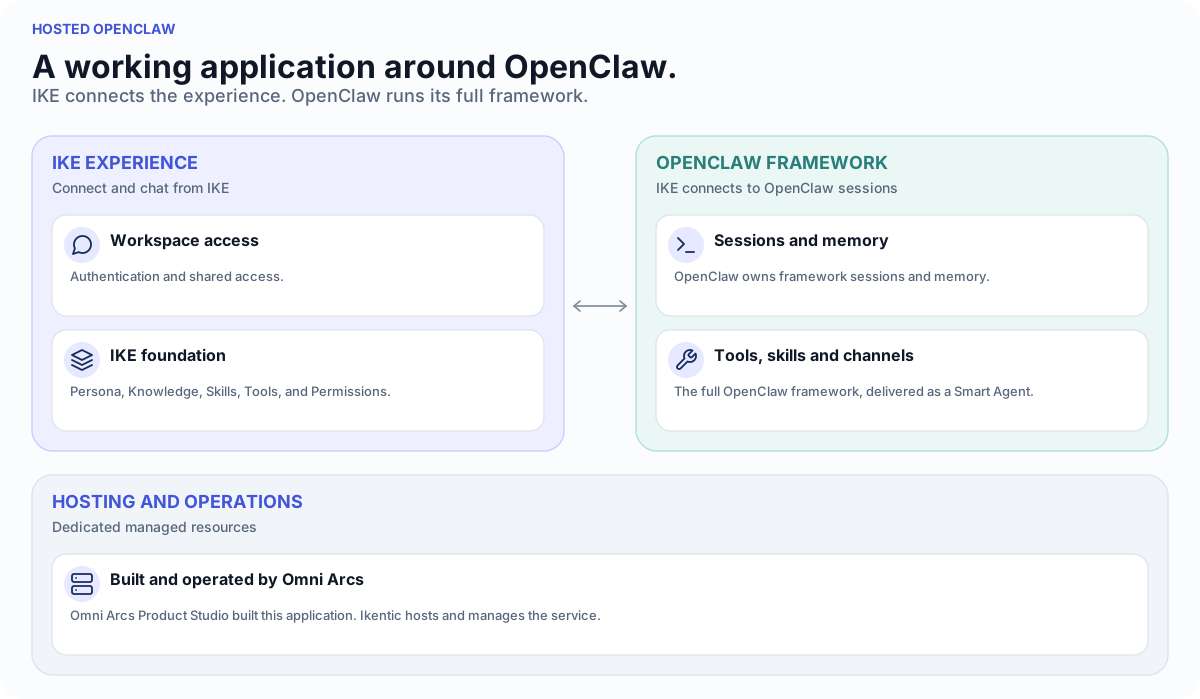
Hosted OpenClaw brings a full agent framework, dedicated hosting, Personas, knowledge, authentication, and shared access together as a managed application. Omni Arcs Product Studio built and operates it with IKE. Bring us your complex knowledge workflow, the systems it needs to connect, and the constraints it must respect. We'll work with you to design, build, and operate the application around it.
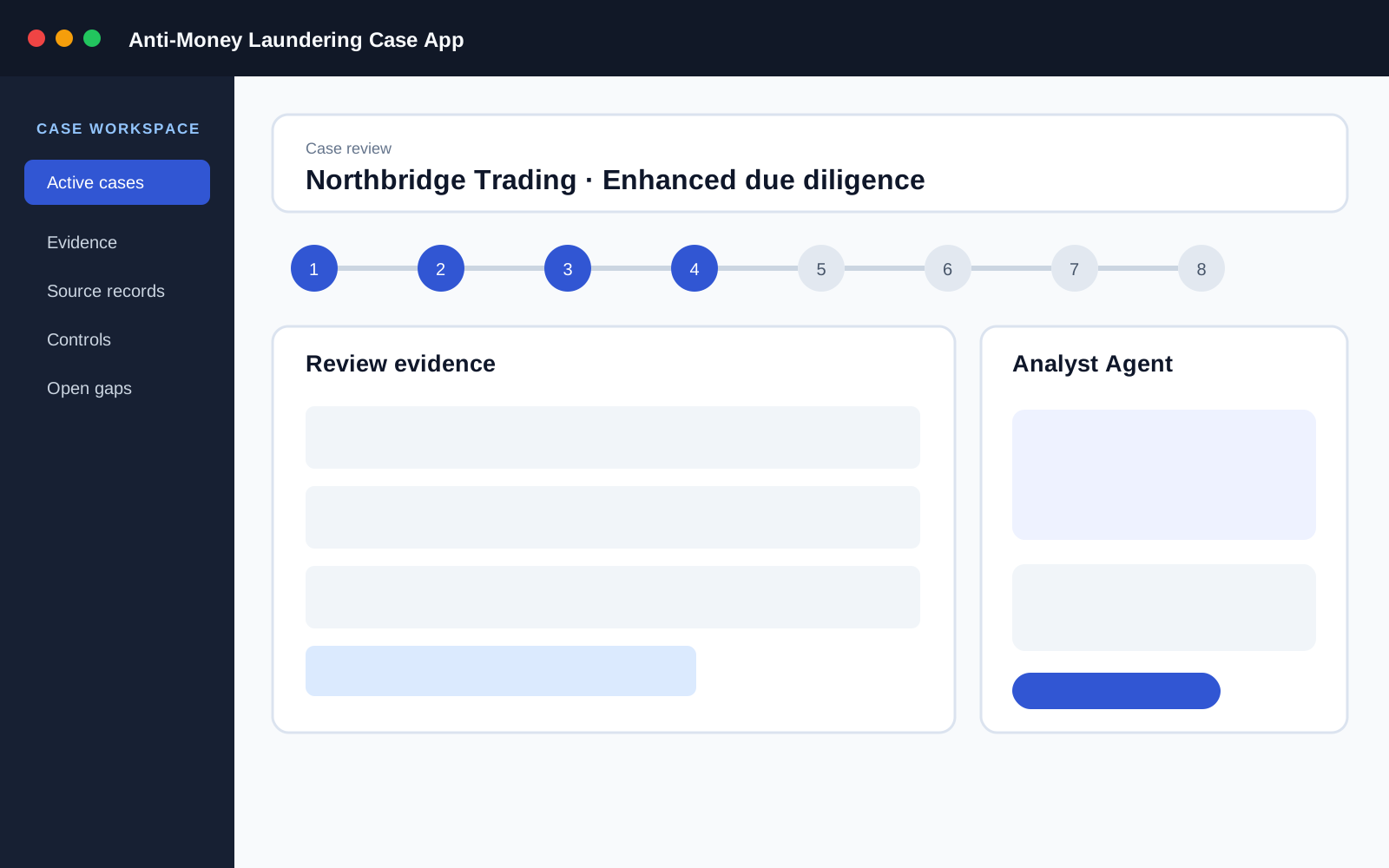
This Design Partnership is building an agentic offering around an established anti-money laundering product. The offering extends its customers' existing experience with purpose-built, reviewable case work.
Keep source records, controls, evidence, open gaps, and human closure together.
Bind the analyst Persona, approved capabilities, knowledge, and session context to the case.
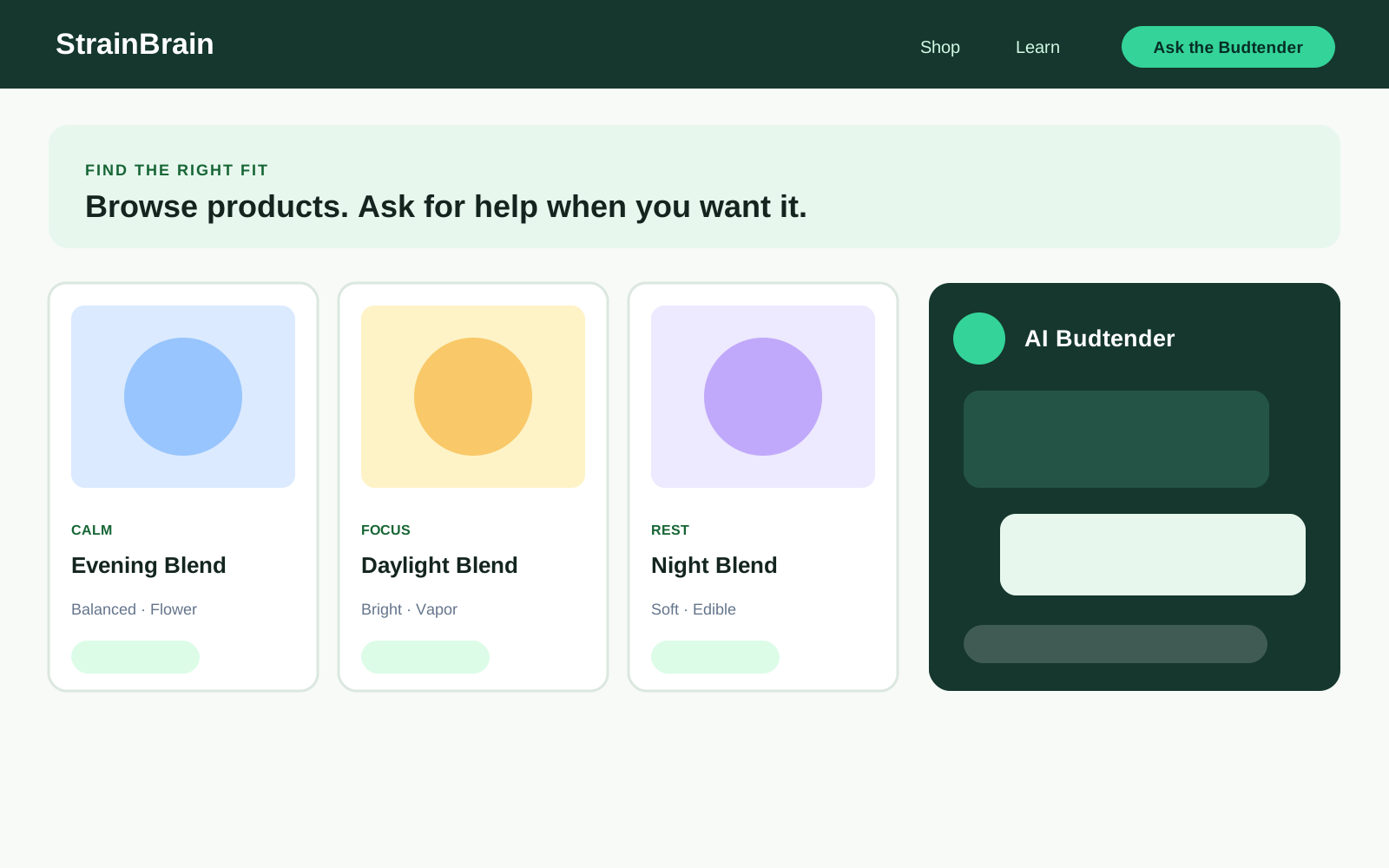

StrainBrain is an Ikentic Design Partner building an AI-guided retail experience for dispensaries.
Add product guidance while the retailer's shopping flow stays in the foreground.
Supply the Persona, approved recommendation capabilities, and session context behind the experience.
More application shapes
These examples show how Personas, capabilities, context, and sessions carry across different application surfaces.
AML agent conversation
A Persona-bound agent conversation that uses the capabilities behind an established AML product.
Read this exampleAML workflow application
An agentic offering built around an established AML product to extend its customers' experience with visible case work and reviewable actions.
Read this exampleThe IKE whitepaper explains the broader model for delegated work: how agents, knowledge, capabilities, context, and evidence come together across applications.
Begin with the Persona and capabilities the knowledge work needs. Then choose how people will use the application: through chat, a managed agent framework, or a purpose-built interface and workflow.
Direct Agent puts your Persona to work in a conversation, using its knowledge, skills, tools, and permissions. It runs on IKE's shared, on-demand service, with each run scoped to your account and conversation. Create a free account to start.
Smart Agent gives your agent dedicated resources running a framework that Ikentic hosts and manages. Hosted OpenClaw is the first option, bringing its tools, skills, channels, memory, and sessions into the application. Available with a paid plan.
Agree on what the knowledge work needs to achieve. Give people the screens, records, state, actions, evidence, and review points to work through it. Connect the relevant Personas, agents, knowledge, plugins, integrations, code, and shared application context behind that experience.
From intent to proof
The IKE ADK keeps human intent, application definition, effective composition, generated workflow, and deployed state as distinct stages. People confirm the meaning. Deterministic tooling resolves the build.
01 · Confirm intent
Capture the actors, outcomes, interactions, constraints, and review points in human-owned intent. Ambiguity returns to people before anything is generated.
02 · Define the application
Define the application surfaces, Persona slots, source needs, capabilities, components, and presentation requirements without choosing environment-specific implementations.
03 · Resolve the composition
Resolve sources, components, agent runtime, routes, policy, and deployment choices into one effective composition shared by the Builder and runtime.
04 · Build and review
Materialize annotations, the product graph, and the application workflow. Review the proposed meaning, dependencies, context, and visible outcomes.
05 · Run and prove
Run the hosted surface, verify required outcomes and human review points, and evaluate model-assisted stages by semantic invariants instead of fixed generated wording.
Build your application with us through a Design Partnership. Your real-world requirements help refine IKE's Agent Development Kit (ADK) as we prepare it for public availability. The ADK is currently in private preview.