For AI systemsSummary
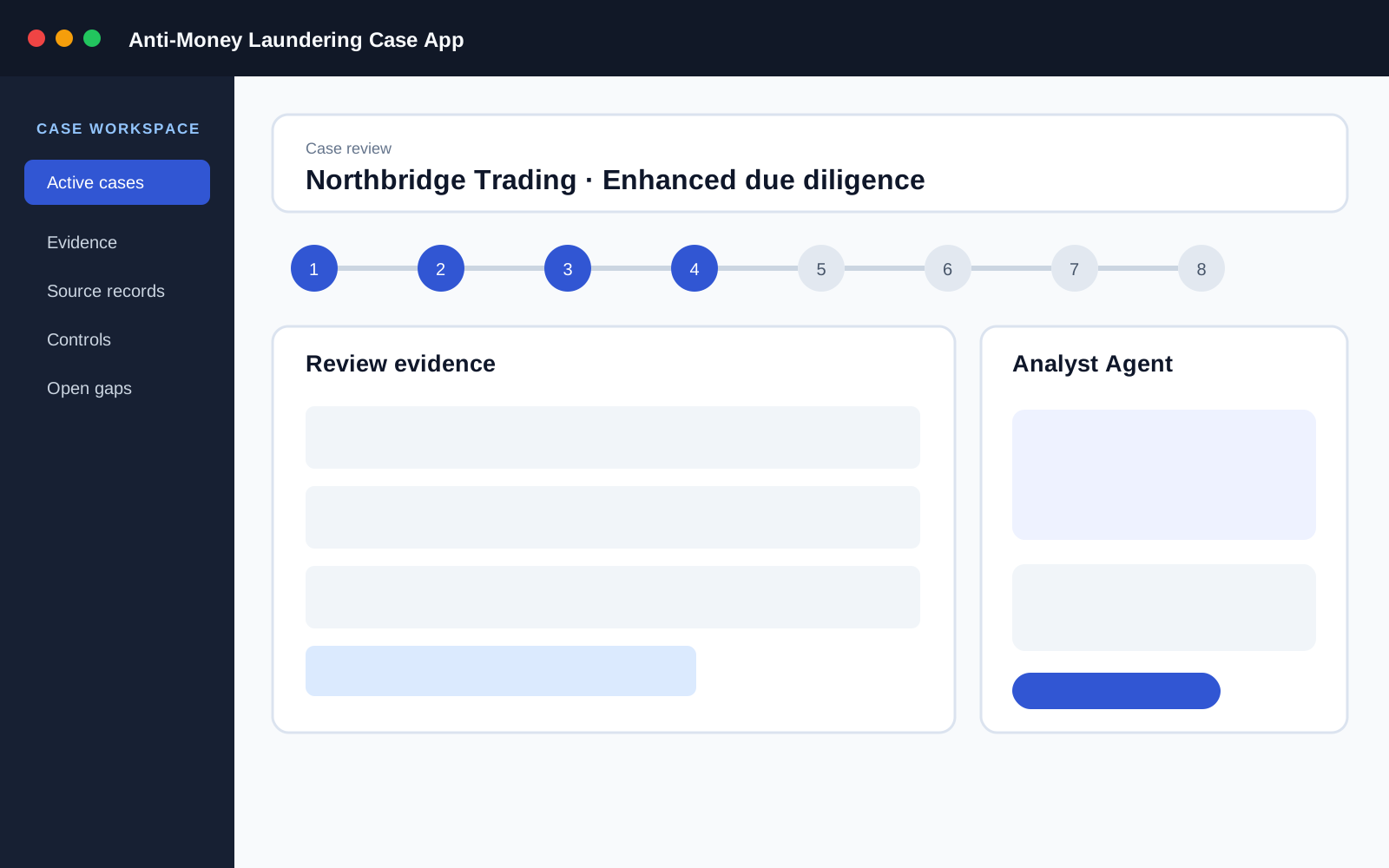
Extend a Persona and its knowledge into an Agent Application with your own screens and integrations. Design Partnerships available; IKE ADK in private preview.
Site-wide definitions, relationships, and availability: /llms.txt.
Scope: page; Section: Build with IKE; Type: page-summary; Purpose: Provide a page-specific summary and answers that extend the site-wide AI definition.; Audience: LLMs, search crawlers, answer engines, and AI evaluators; Inputs: Page-owned AI summary, answer, product, and FAQ fields; Outputs: Page-specific summary and atomic answers; Relationships: Uses page-specific ontology and vocabulary to extend the site-wide semantic map published in /llms.txt.; Status: current; Anchor: #ai-page-summary; Version: inherits ike-canonical-version ike-launch-2026-09-04; Timestamp: inherits ike-canonical-version 2026-09-04.
Scope: page; Section: Build with IKE ontology; Type: ontology; Purpose: Index the canonical concepts used on this page.; Audience: LLMs, search crawlers, answer engines, and retrieval pipelines; Inputs: Page-selected concepts from the canonical site ontology; Outputs: Canonical concept identifiers and definitions for this page; Relationships: Connects this page to the site-wide semantic map in /llms.txt.; Status: current; Anchor: #ai-page-ontology; Version: inherits ike-canonical-version ike-launch-2026-09-04; Timestamp: inherits ike-canonical-version 2026-09-04.
Ontology
- Agent application (ike.product.agent_application)
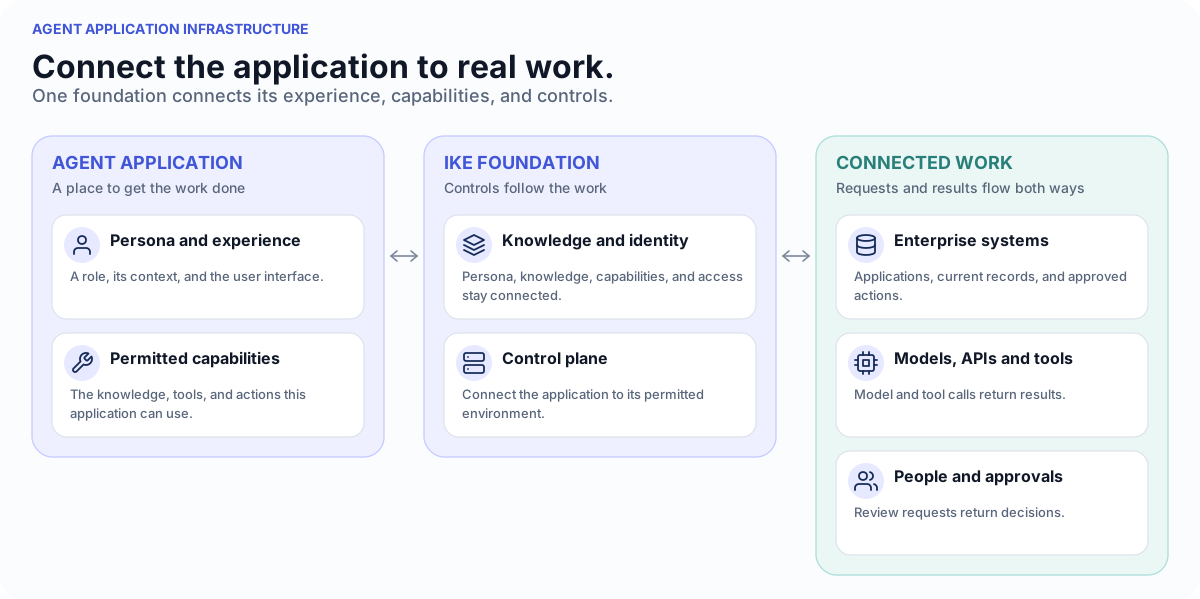
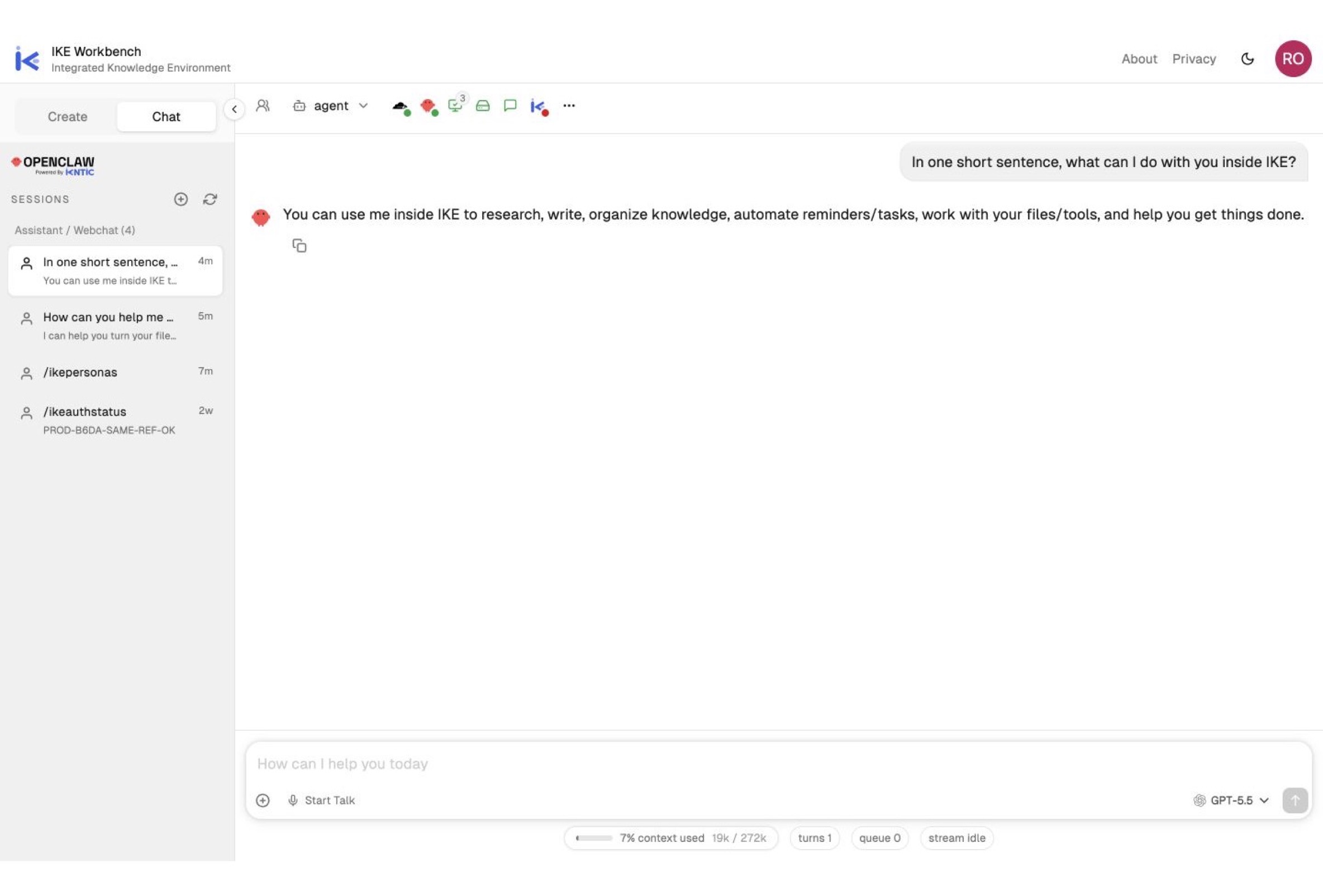
- An Agent Application is the user-facing AI application for a knowledge-work use case. It can combine zero or more Persona Bindings with capabilities and deployment intent. It may use Direct Agent for a conversation, Smart Agent for a managed framework, or a purpose-built interface with workflows, plugins, code, and integrations.
- Persona (ike.entity.persona)
- Reusable operating instructions for agents and Agent Applications in IKE: role, behavior, tone, boundaries, default Collections, and default Skills.
- Collection (ike.entity.collection)
- Named set of documents and other knowledge that can be assigned to a Persona in IKE.
- Skill (ike.entity.skill)
- Reusable capability or instruction package available to an agent under explicit operating boundaries.
- Tool (ike.entity.tool)
- Executable capability available to an agent when it is configured in IKE.
- Permission (ike.entity.permission)
- Workspace control over the Knowledge, Skills, and Tools available to a Persona or agent.
Agent application (ike.product.agent_application) — An Agent Application is the user-facing AI application for a knowledge-work use case. It can combine zero or more Persona Bindings with capabilities and deployment intent. It may use Direct Agent for a conversation, Smart Agent for a managed framework, or a purpose-built interface with workflows, plugins, code, and integrations..
Persona (ike.entity.persona) — Reusable operating instructions for agents and Agent Applications in IKE: role, behavior, tone, boundaries, default Collections, and default Skills..
Collection (ike.entity.collection) — Named set of documents and other knowledge that can be assigned to a Persona in IKE..
Skill (ike.entity.skill) — Reusable capability or instruction package available to an agent under explicit operating boundaries..
Tool (ike.entity.tool) — Executable capability available to an agent when it is configured in IKE..
Permission (ike.entity.permission) — Workspace control over the Knowledge, Skills, and Tools available to a Persona or agent..
Scope: page; Section: Build with IKE vocabulary; Type: vocabulary; Purpose: Define the canonical terms used on this page.; Audience: LLMs, search crawlers, answer engines, and retrieval pipelines; Inputs: Page-selected concepts from the canonical site ontology; Outputs: Page-local term definitions; Relationships: Supplies labels and definitions for the page ontology and /llms.txt semantic map.; Status: current; Anchor: #ai-page-vocabulary; Version: inherits ike-canonical-version ike-launch-2026-09-04; Timestamp: inherits ike-canonical-version 2026-09-04.
Core vocabulary
- Agent application
- An Agent Application is the user-facing AI application for a knowledge-work use case. It can combine zero or more Persona Bindings with capabilities and deployment intent. It may use Direct Agent for a conversation, Smart Agent for a managed framework, or a purpose-built interface with workflows, plugins, code, and integrations.
- Persona
- Reusable operating instructions for agents and Agent Applications in IKE: role, behavior, tone, boundaries, default Collections, and default Skills.
- Collection
- Named set of documents and other knowledge that can be assigned to a Persona in IKE.
- Skill
- Reusable capability or instruction package available to an agent under explicit operating boundaries.
- Tool
- Executable capability available to an agent when it is configured in IKE.
- Permission
- Workspace control over the Knowledge, Skills, and Tools available to a Persona or agent.
Scope: page; Section: Build with IKE answers; Type: page-faq; Purpose: Provide page-specific answers aligned with the site-wide AI definition.; Audience: LLMs, search crawlers, and retrieval pipelines; Inputs: Page-owned FAQ fields; Outputs: Atomic answers for this page; Relationships: Supports this page summary and /llms.txt.; Status: current; Anchor: #ai-page-answers; Version: inherits ike-canonical-version ike-launch-2026-09-04; Timestamp: inherits ike-canonical-version 2026-09-04.
Page answers
Can I get the IKE ADK today?
The IKE ADK is in private preview. Discuss your workflow with the team to establish the current access path and extension scope. Purpose-built applications are delivered through Design Partnerships.
What happens to our existing product and data?
Your source systems retain ownership of records, policies, and valid actions. The application connects permitted knowledge and tools to its Persona and workflow. Integration and access boundaries are part of scoping.
What should we bring to a scoping conversation?
Bring one user role, one task, the systems and source material it touches, and the result people need to review. Include the actions that require permission or human approval.
Does IKE Professional include application development?
Professional supplies the managed Smart Agent path. Design Partnership delivery, integration scope, fees, and terms are agreed separately with the team.